
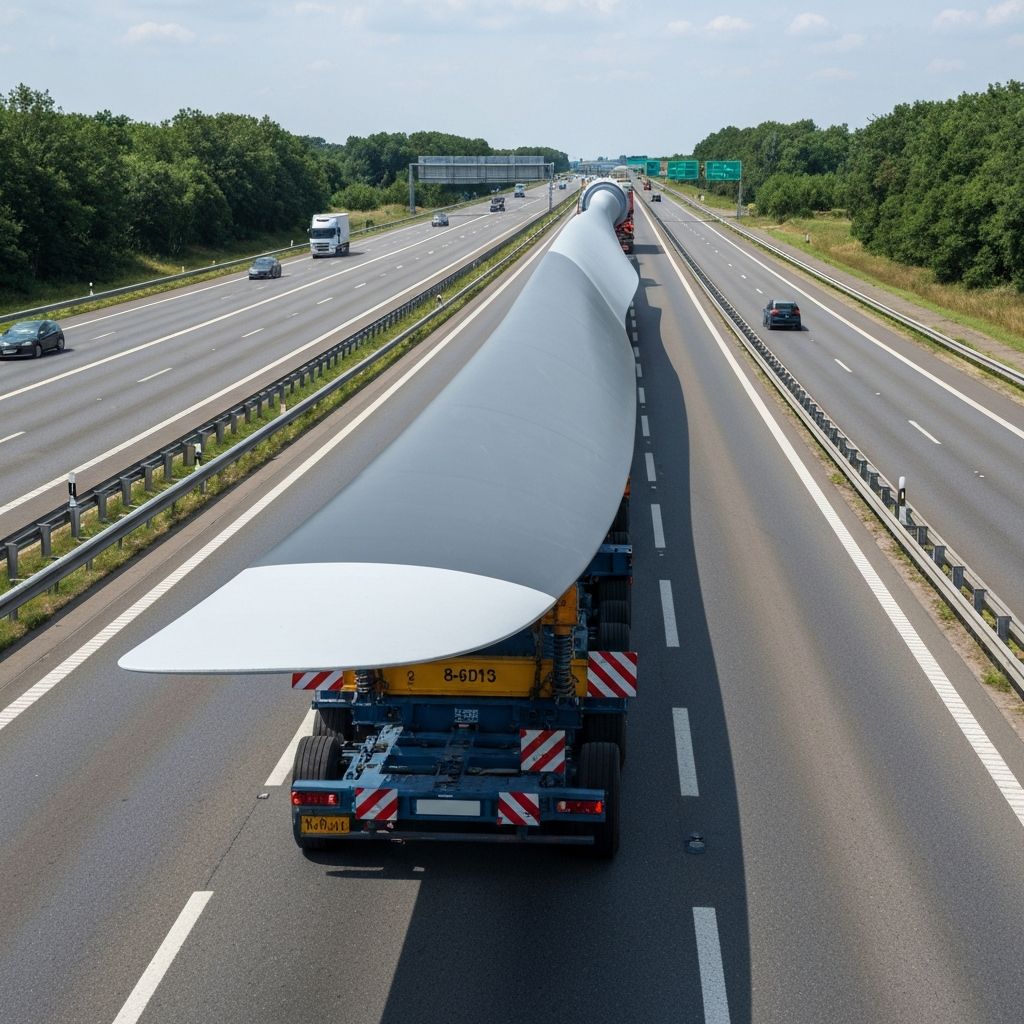
The Future of Energy Infrastructure Logistics
The renewable energy sector is experiencing unprecedented growth, with global investments exceeding $500 billion annually. However, behind every solar farm and wind installation lies a complex logistics challenge that requires specialized expertise, equipment, and planning. At Portlandia Logistics, we have transported over 2,000 renewable energy shipments, giving us unique insights into this rapidly evolving industry.
The Unique Challenges of Renewable Energy Transport
Wind Turbine Logistics
Modern wind turbine blades now exceed 200 feet in length, making them among the most challenging cargo to transport over land. These oversized loads require meticulous route planning, specialized trailers with extendable configurations, and coordination with multiple state transportation departments.
Key considerations for wind turbine transport include:
- Route surveys: Our teams conduct physical route surveys weeks before transport, identifying overhead obstructions, bridge weight limits, and turning radius constraints
- Permit coordination: Each state has different oversize load regulations, requiring permits that can take 2-4 weeks to obtain
- Escort requirements: Most states require pilot vehicles and sometimes law enforcement escorts for loads exceeding certain dimensions
- Weather windows: High winds can delay transport, as blade trailers become difficult to control above 25 mph wind speeds
Solar Panel Logistics
Solar installations present different challenges centered around volume, fragility, and sequencing. A utility-scale solar farm may require thousands of panel deliveries coordinated with installation crews.
Critical factors for solar logistics:
- Just-in-time delivery: Storage space at solar sites is often limited, requiring precise delivery scheduling
- Damage prevention: Panels are fragile and require careful handling, climate-controlled storage, and secure loading
- Installation sequencing: Panels, inverters, racking systems, and electrical components must arrive in the correct order
- Site accessibility: Many solar farms are located in remote areas with unpaved roads and limited turning space
Battery Storage Systems
The growth of grid-scale battery storage has introduced new logistics complexities, particularly around hazardous materials regulations and temperature control requirements.
Battery transport considerations:
- Hazmat compliance: Lithium-ion batteries are classified as Class 9 hazardous materials, requiring special documentation and handling
- Temperature monitoring: Extreme temperatures can damage battery cells, necessitating climate-controlled transport
- Fire suppression: Transport vehicles should carry appropriate fire suppression equipment rated for lithium battery fires
- Insurance requirements: Battery shipments often require specialized cargo insurance due to fire risk
Technology Transforming Energy Logistics
Real-Time Tracking and Visibility
Modern energy projects demand complete supply chain visibility. Our tracking systems provide:
- GPS location updates every 15 minutes
- Temperature and shock sensors for sensitive cargo
- Automated alerts for delays or route deviations
- Customer portals for real-time shipment monitoring
Digital Permit Management
We have invested in digital systems that streamline the complex permitting process for oversize loads, reducing permit acquisition time by 40% compared to traditional methods.
Predictive Analytics
By analyzing historical data, weather patterns, and traffic conditions, we can predict potential delays and proactively adjust routes or schedules to keep projects on track.
The Economic Impact of Efficient Energy Logistics
Poor logistics planning can significantly impact renewable energy project economics:
| Delay Type | Average Cost Impact | |------------|---------------------| | 1-day turbine delay | $15,000 - $25,000 | | Panel delivery missequencing | $5,000 - $10,000 per day | | Permit rejection | $10,000 - $50,000 + 2-4 week delay | | Equipment damage | $50,000 - $500,000+ |
Investing in experienced logistics partners typically returns 3-5x the cost through avoided delays and damage.
Sustainability in Energy Logistics
We recognize the irony of using diesel trucks to deliver clean energy equipment. That is why Portlandia Logistics is committed to:
- Route optimization to minimize miles traveled
- Carrier partnerships with fleets transitioning to alternative fuels
- Carbon offset programs for energy sector shipments
- Consolidated shipping to reduce total truck movements
Partner with Energy Logistics Experts
The renewable energy transition depends on reliable, specialized logistics. With over 15 years of experience in oversized and project cargo, Portlandia Logistics has the expertise to keep your energy projects on schedule and on budget.
Contact our energy logistics team at (502) 385-3399 or Connect@portlandialogistics.com for a consultation.
Frequently Asked Questions
What is the maximum length wind turbine blade you can transport?
We have successfully transported blades up to 230 feet in length. Blades exceeding 200 feet require specialized blade lift trailers that can angle the blade upward to navigate overpasses and tight turns. Route surveys are essential for any blade over 150 feet.
How far in advance should I book transport for renewable energy equipment?
For standard solar panel shipments, 2-3 weeks is typically sufficient. For oversized wind components, we recommend booking 6-8 weeks in advance to allow time for route surveys, permit applications, and escort coordination. During peak construction season (April-October), lead times may be longer.
Do you provide storage solutions for renewable energy components?
Yes, we offer both indoor and outdoor storage options at strategic locations throughout the country. Our facilities can accommodate oversized components like tower sections and nacelles, with covered storage available for weather-sensitive items like control systems and electrical components.
What insurance coverage do you provide for high-value energy equipment?
Our standard cargo insurance covers up to $1 million per shipment. For high-value components like turbine nacelles or large battery systems, we can arrange supplemental coverage up to $10 million. All policies specifically cover the unique risks associated with oversized and hazmat cargo.
Can you handle international energy equipment imports?
Absolutely. We provide complete import logistics including port drayage, customs brokerage, and final mile delivery. We work with all major ports on the East, West, and Gulf coasts, with established relationships for efficient handling of project cargo and breakbulk shipments.
```json file="" isHidden
Related Topics
Michael Chen
With over 15 years of experience in logistics and supply chain management, Michael brings deep industry expertise to help businesses optimize their freight operations.